
CPAP & BiPAP 5 min read
How a CPAP Machine Works and Why It Is Used
Learn how a CPAP machine works step by step, why doctors prescribe it for sleep apnea, what to expect in the first week, and why renting first makes sense.

Written by Kosmed Healthcare, CPAP, BiPAP & Oxygen Equipment on Rent, Delhi NCR
Since 2014, Kosmed Healthcare has rented CPAP, BiPAP and oxygen concentrators across Delhi NCR, with free home delivery, expert setup and 24x7 support.
Published 5 min read
A CPAP (Continuous Positive Airway Pressure) machine is a medical device that delivers pressurised air to people who have breathing problems during sleep. Repeated airway blockage can cause loud snoring, morning headaches and daytime tiredness, and it often wakes a person up and affects concentration at work. A CPAP machine with the correct mask and pressure setting is a commonly recommended treatment that supports better sleep and overall health.
In this article we explain how the machine works step by step, why it is used and when to speak to your doctor. Understanding correct use helps you feel more rested and avoid daytime fatigue caused by disrupted sleep.
What Is a CPAP Machine?
A CPAP machine provides a continuous stream of pressurised air that keeps the upper airway from becoming blocked. It uses a mask that covers the nose, or the nose and mouth, to deliver this air supply. Many people have obstructive sleep apnea (OSA), where the throat is blocked repeatedly and the normal sleep cycle is disrupted. CPAP keeps the airway open with steady air pressure, which prevents these blockages during sleep.
How a CPAP Machine Works: Step-by-Step Explanation
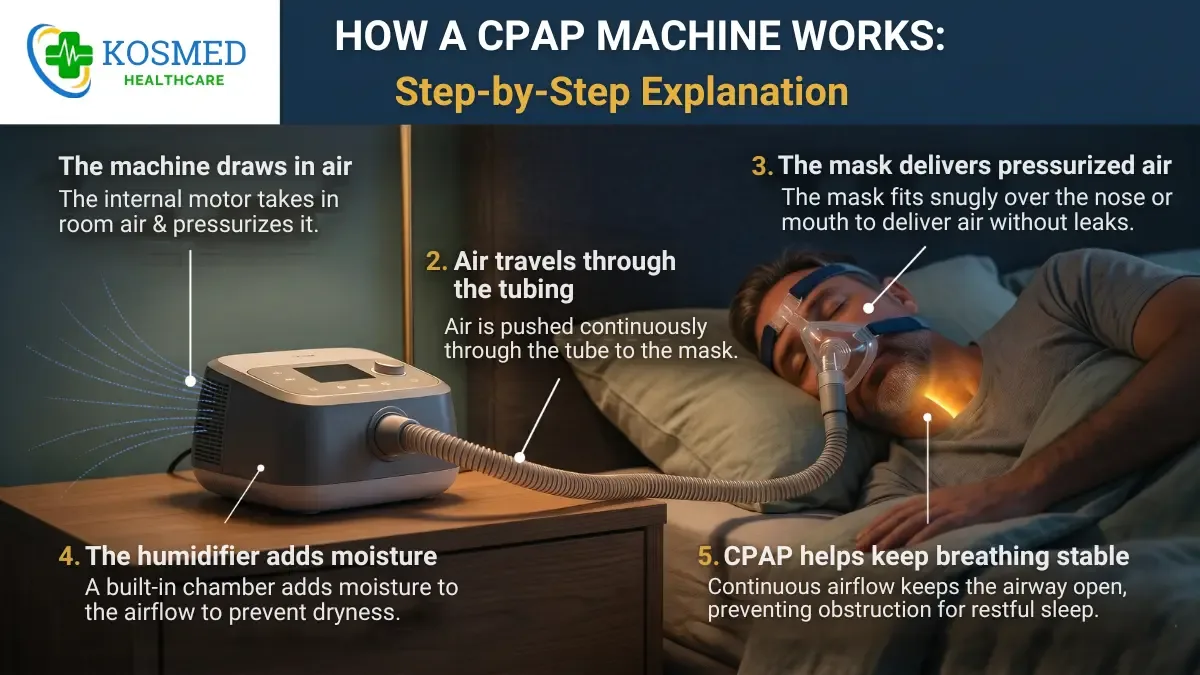
This section explains the working of the device and how it supports breathing during sleep.
1. The machine draws in air
The machine takes in room air and an internal motor delivers it at the prescribed pressure. This pressure is set according to the patient's condition and needs.
2. Air travels through the tubing
The machine pushes air continuously through the tube connected to the mask. This airflow helps prevent the soft tissue of the throat from collapsing and supports undisturbed sleep.
3. The mask delivers pressurised air
The mask fits over the nose, or the nose and mouth. A well-fitted mask delivers pressure without leaks and makes the therapy more comfortable.
4. The humidifier adds moisture to the air
Most CPAP machines come with a humidifier, and some have a heated humidifier, which adds moisture to the airflow and reduces dryness of the nose and throat.
5. CPAP helps keep breathing stable
With a steady, uninterrupted airflow, a person has fewer apnea episodes and better sleep. The therapy also helps maintain overnight oxygen levels, which supports restful sleep and fresher mornings.
Why Do Doctors Prescribe CPAP Machines?
Doctors mainly prescribe CPAP therapy to treat obstructive sleep apnea (OSA) in patients whose sleep is repeatedly disrupted by limited airflow, usually caused by blockage of the upper airway. Other benefits include:
- Fewer breathing interruptions: the machine keeps the airway open, which improves breathing during sleep.
- Better sleep quality: continuous pressurised air reduces blockage and sleep disruption.
- Less snoring: CPAP helps prevent the narrowing or collapse of the airway that leads to snoring.
- Lower sleep apnea related risks: in some patients it helps control risks such as high blood pressure.
- Less daytime tiredness: good sleep helps prevent daytime fatigue and headaches and supports focus and productivity.
- Healthy blood oxygen levels: it helps keep oxygen levels normal during the night.
CPAP is not a cure for sleep apnea, but it effectively reduces the symptoms. The machine provides consistent pressure at the prescribed level to avoid sleep interruptions. If your doctor suggests a different type of support, you can also read about a BiPAP machine, which delivers two different pressure levels for inhaling and exhaling.
When Is CPAP Used?
CPAP therapy is usually recommended by doctors for obstructive sleep apnea. Other situations where it may be advised include:
- Obstructive sleep apnea
- Loud snoring with breathing pauses
- Excessive daytime sleepiness
- Sleep apnea associated with other health conditions
CPAP is not recommended for every breathing disorder. Some people need other types of respiratory support, such as an oxygen concentrator, depending on their condition. If you are unsure whether you have sleep apnea, a sleep study can help your doctor diagnose it.
What to Expect During the First Week of CPAP Therapy
In the first week you may not notice a big improvement, but you will get used to the mask and the device. Some patients adjust quickly while others need more time. With regular use, sleep and related symptoms improve.
- First and second nights: wearing a mask at night may feel uncomfortable until you get used to it.
- Third and fourth nights: you become more familiar with the machine and mask. Wearing the mask for a short time during the day can reduce night-time anxiety.
- Fifth to seventh nights: most patients feel comfortable with the mask and notice better sleep, less snoring, morning alertness and fewer sleep interruptions.
Results vary from person to person and some people take longer to adjust. Some patients may feel irritation, dryness, air leaks or skin irritation. These issues can usually be managed with a comfortable, good quality mask, a good sleeping position and regular use of the machine.
When to Talk to Your Doctor
Talk to your doctor if you notice no improvement, have difficulty breathing, faint, or have chest pain. Also speak to your doctor about nasal dryness, constant air leaks, nasal blockage, or no improvement in sleep even after using the machine regularly for several weeks. Always read the machine manual for safe and effective use.
Where to Get a CPAP Machine: Rent First
CPAP machines are available through sleep clinics, hospitals and medical equipment vendors. Renting is a practical way to start, because it lets you get used to the machine and mask before deciding on long-term use, without a large upfront cost. Kosmed Healthcare provides a CPAP machine on rent in Delhi NCR with free home delivery, expert setup and 24x7 support. We also offer a BiPAP machine, a portable oxygen concentrator on rent and other home healthcare equipment. You can contact our team for guidance.
Before renting any CPAP machine, check the machine properly, ask for a clean mask and cleaning instructions, and confirm the after-support options. CPAP should be used only when prescribed by a doctor after proper diagnosis.
Medical disclaimer: This article is for general information only. It is not medical advice, a diagnosis or a treatment plan. Always follow your doctor’s prescription and speak to a qualified doctor about your own health.