Oxygen therapy 6 min read
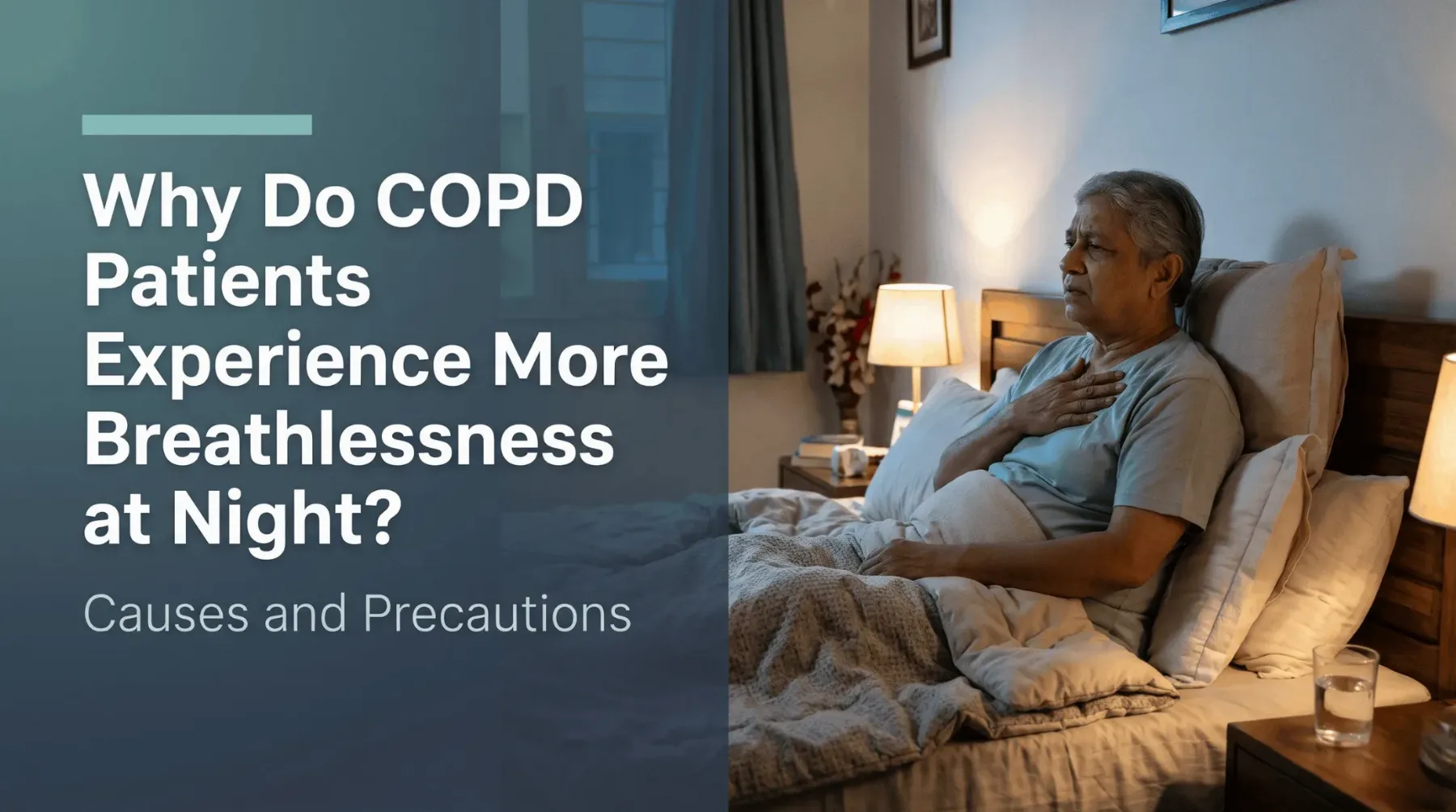
Why Do COPD Patients Experience More Breathlessness at Night? Causes and Precautions
Why does COPD breathlessness get worse at night? Posture, mucus build-up and sleep changes are common causes. Know the warning signs and the precautions families should follow.

Written by Kosmed Healthcare, CPAP, BiPAP & Oxygen Equipment on Rent, Delhi NCR
Since 2014, Kosmed Healthcare has rented CPAP, BiPAP and oxygen concentrators across Delhi NCR, with free home delivery, expert setup and 24x7 support.
Published 6 min read
There are various reasons for the breathlessness and COPD (chronic obstructive pulmonary disease) is one of the main reasons for this condition. Patients may notice an increase in breathlessness during walking, night, lying down and during the night. This can affect the condition of the patient and can also influence the quality of sleep with increasing anxiety within the patients. Breathlessness at night in COPD cannot be normal and can indicate various conditions related to the patient. This condition can occur due to infection, lying in bad posture, accumulation of mucus and other related conditions. In this article we will discuss reasons of breathlessness at night in COPD and the reasons with necessary precautions to take for the same. You can also read how Delhi air pollution affects COPD patients.
What Is Nighttime Breathlessness in COPD?
Nighttime breathlessness in COPD is the condition when a patient is not able to breathe normally during the night time. There can be various reasons related to the condition like lying in bad posture, infection of the lungs, worsening of COPD condition, accumulation of the mucous which can block the normal air flow within the respiratory tract. This condition can be serious in some cases and patients may need to visit the doctor for the same. This condition is uncomfortable and a person is not able to sleep or influences the quality of the sleep.
Why Does Breathlessness Become Worse at Night?
There are various factors which are related to the worsening of breathlessness during the night time and those include:
- Changes in Body Position
- Airway Narrowing and Mucus Accumulation
- Reduced Breathing Efficiency during Sleep
- Nocturnal Cough and Wheezing
What are the other Conditions That Can Cause Nighttime Breathlessness?
To evaluate the COPD at night, there are other possible reasons which doctors can take into consideration and those include:
- Orthopnoea
- Paroxysmal Nocturnal Dyspnoea
- Sleep Apnoea and Sleep-Disordered Breathing
- Respiratory Infection
- Anxiety and Panic Episodes
- COPD Progression or Exacerbation
If sleep apnoea is suspected, a sleep study can help the doctor find the cause, and our guide explains what a sleep study at home involves.
Symptom Diary: What Should Families Record?
This is one of the methods where doctors can diagnose the condition more accurately and can suggest the effective treatment for the condition. This technique is used to note down some of the important parameters during the COPD condition and the time of worsening it and the symptoms that will be recorded for effective treatment. The caregiver can record these observations:
- Time of symptoms
- Sleeping position
- Nighttime awakenings
- Cough and wheezing.
- Sputum changes.
- Associated symptoms
- Snoring and breathing pauses
- Medication use
- Oxygen readings
How Do Doctors Assess Nighttime Breathlessness?
The doctor can assess the situation and monitor the symptoms which have elevated during nighttime breathlessness. To identify the changes in the COPD condition of a patient will help to judge the condition more accurately and will be helpful in providing the effective treatment of the condition. Here are some of the recommendations which can be assessed during the monitoring of the patient:
1. Physical Examination
Physical examination is the first line of assessment and to understand the changes in the condition of COPD. In this examination doctors may monitor blood pressure, oxygen saturation, pulse rate, breathing patterns, breathing rate etc.
2. Spirometry
Spirometry is the parameter which is used to look for the patient's air intake and how quickly the patient is able to breathe. This test is not always an effective parameter to explain the nighttime breathlessness condition.
3. Chest X-ray
This is the non-invasive diagnostic test used to look for the chest cavity. This test helps to look for the extent of infection, accumulation of mucus, chest tightening etc.
4. Blood Tests and Blood Gas Analysis
This is an important test used to detect the retention of carbon dioxide in the blood and helps to diagnose the condition well. This test may help to recognise the condition of anemia, infection and other related conditions which can lower the oxygen level in blood and can lead to breathlessness.
5. Heart Assessment
Heart assessment is also an important parameter to look for the condition of the heart which is responsible for pumping blood. ECG can be done to look for the heart rhythms and helps to detect any signs of cardiac abnormality which can influence the oxygen delivery within the body.
6. Sleep Assessment
Sleep apnea is another condition which can lead to breathlessness at night within patients. It is important to determine and monitor the sleep patterns and oxygen levels within the sleep. This will help to diagnose the condition more accurately and help for better diagnosis.
When Is Routine Medical Review Needed?
Patients should make the habit of routine medical review to look for the conditions which worsens the breathlessness of the patient. There are various symptoms when patient need to go for routine review and those include:
- Breathlessness is gradually increasing with time
- When patient needs more pillows to sleep
- Increase in night coughing
- Wheezing becomes frequent
- High sputum production
- More snoring conditions
- Not able to sleep properly and feeling anxiety
Emergency Signs That Should Not Be Ignored
There are various signs when patient should not ignore and call for emergency and those situations include:
- Severe breathlessness at rest
- Inability to speak in complete sentences
- Blue or grey lips
- Change in color of tongue or fingertips
- Increased and sudden chest pain
- Chest pressure with tightness
- Patient feeling confusion or fainting
- More worsening of breathing condition
- Patient coughing with blood
- Oxygen saturation is below patients prescribed target
Precautions to Reduce Nighttime Breathing Discomfort
COPD management is one of the important parameters to keep the patient in a comfortable situation. There are various precautions which can be followed for good management of the condition and those include:
- Follow the Prescribed Treatment Plan
- Choose a Comfortable Sleeping Position
- Keep the Bedroom Environment Comfortable
- Avoid Heavy Meals before Bedtime
- Practice Recommended Breathing Techniques
- Follow the Doctor's Oxygen Instructions
If your doctor has prescribed oxygen at night, you can arrange an oxygen concentrator on rent. Read 5 LPM vs 10 LPM oxygen concentrators and oxygen concentrator vs oxygen cylinder (useful as a backup during power cuts) to understand your options, and see portable oxygen concentrators on rent if oxygen is needed away from home.
Is Non-Invasive Ventilation Useful for COPD at Night?
Non Invasive ventilation (NIV) is not the universal treatment for nighttime breathlessness with COPD condition. This non-invasive technique can provide supplementary pressurised oxygen which helps to comfort the condition of breathlessness. But this is not suitable for all the patients and should be only be given after knowing the patient history and severity of the COPD condition. This should be only given after knowing the blood gas conditions and clinical conditions, after proper assessment of the condition. Patients should avoid purchasing BiPAP or NIV for breathlessness conditions before consulting the doctor for the same. When a doctor does advise it, Kosmed Healthcare provides a BiPAP machine on rent in Delhi NCR, and you can read why a BiPAP machine is used and BiPAP for COPD. For any help, contact our team.
Medical disclaimer: This article is for general information only. It is not medical advice, a diagnosis or a treatment plan. Always follow your doctor’s prescription and speak to a qualified doctor about your own health.